How to choose a home EV charger
For a home in Quebec, choosing a charger comes down to four questions: the charging level, connectivity, the amperage your panel can support, and eligibility for the government grant.
About this service
Level 1 or Level 2: where to start
For a home in Quebec, choosing a charger comes down to four questions: the charging level, connectivity, the amperage your panel can support, and eligibility for the government grant.
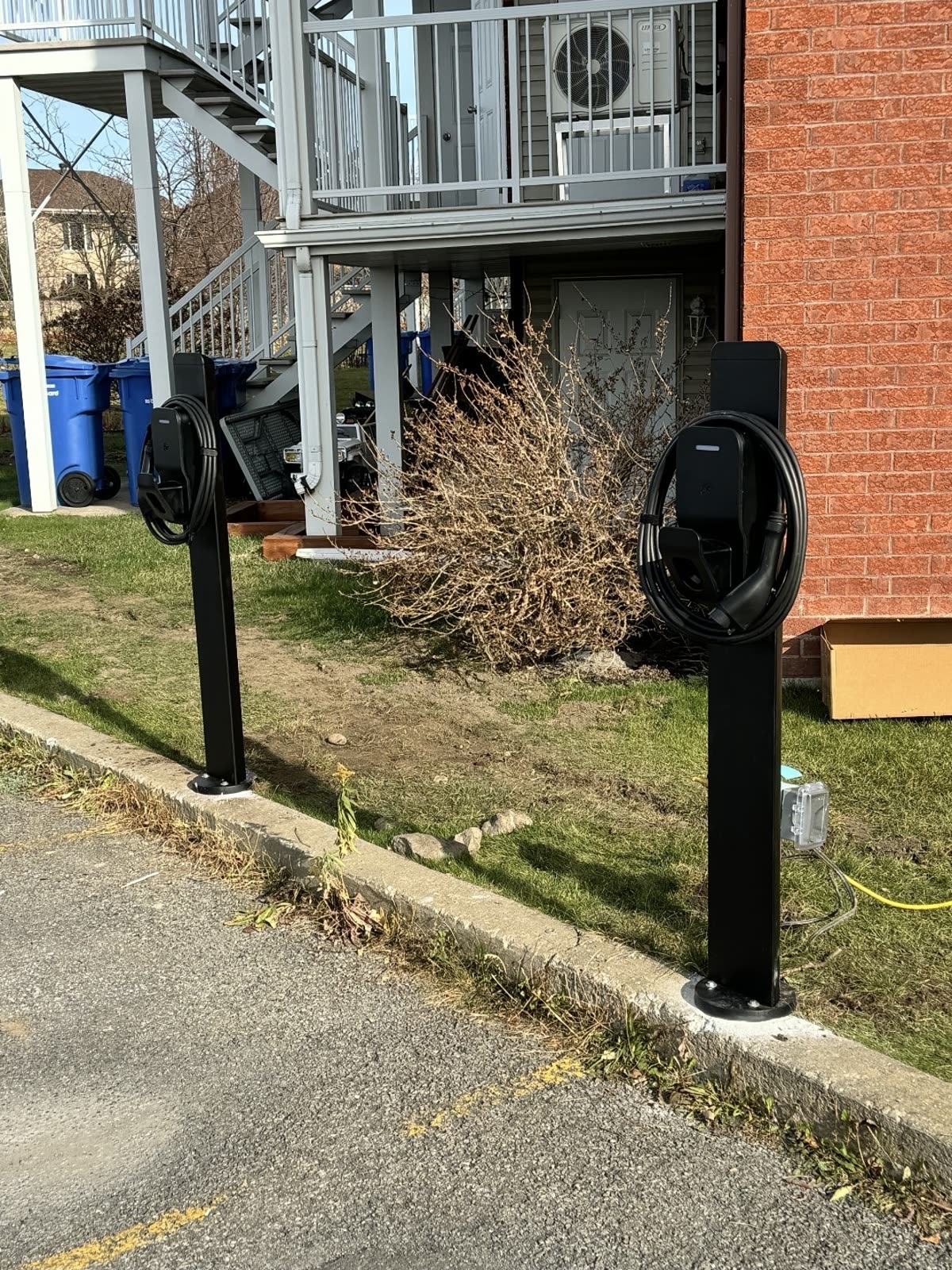
This page is about choosing. To find out how to get part of the purchase refunded, read our grant guide instead. Level 1 or Level 2? A Level 1 charger plugs into a standard 120 V household outlet: it is the slowest way to charge. A Level 2 charger runs at 208 or 240 V, and it is the level we install at home (240 V, 30 A to 50 A). It is also the only level the Écorecharge program accepts for its $600. The fast chargers you see along the highway are public ones; they are not installed in a home.
A Level 2 charger needs a dedicated 240 V circuit running from your panel. That is real electrical work: in Quebec, it must be done by an electrical contractor holding a Régie du bâtiment du Québec licence. C-Cure Électrique, RBQ master electrician 5755-2234-01, installs Level 2 chargers compatible with your vehicle on Montreal's South Shore, whether or not you have already bought your charger.
01 · Key step
Connected or not: the effect on the government grant
Since April 1, 2026, only connected chargers, also called smart chargers, qualify for the $600 Écorecharge grant. A connected charger receives and processes remote commands through a mobile or web app. If you want the grant, this criterion decides: a charger that is not connected does not qualify, even at Level 2. On top of that you need a model on the official list, a new charger and a purchase from a Canadian retailer. Check these points before paying, because the government states that only distributors and manufacturers can ask for a model to be added to the list.
02 · Key step
Amperage and electrical panel: what limits your choice
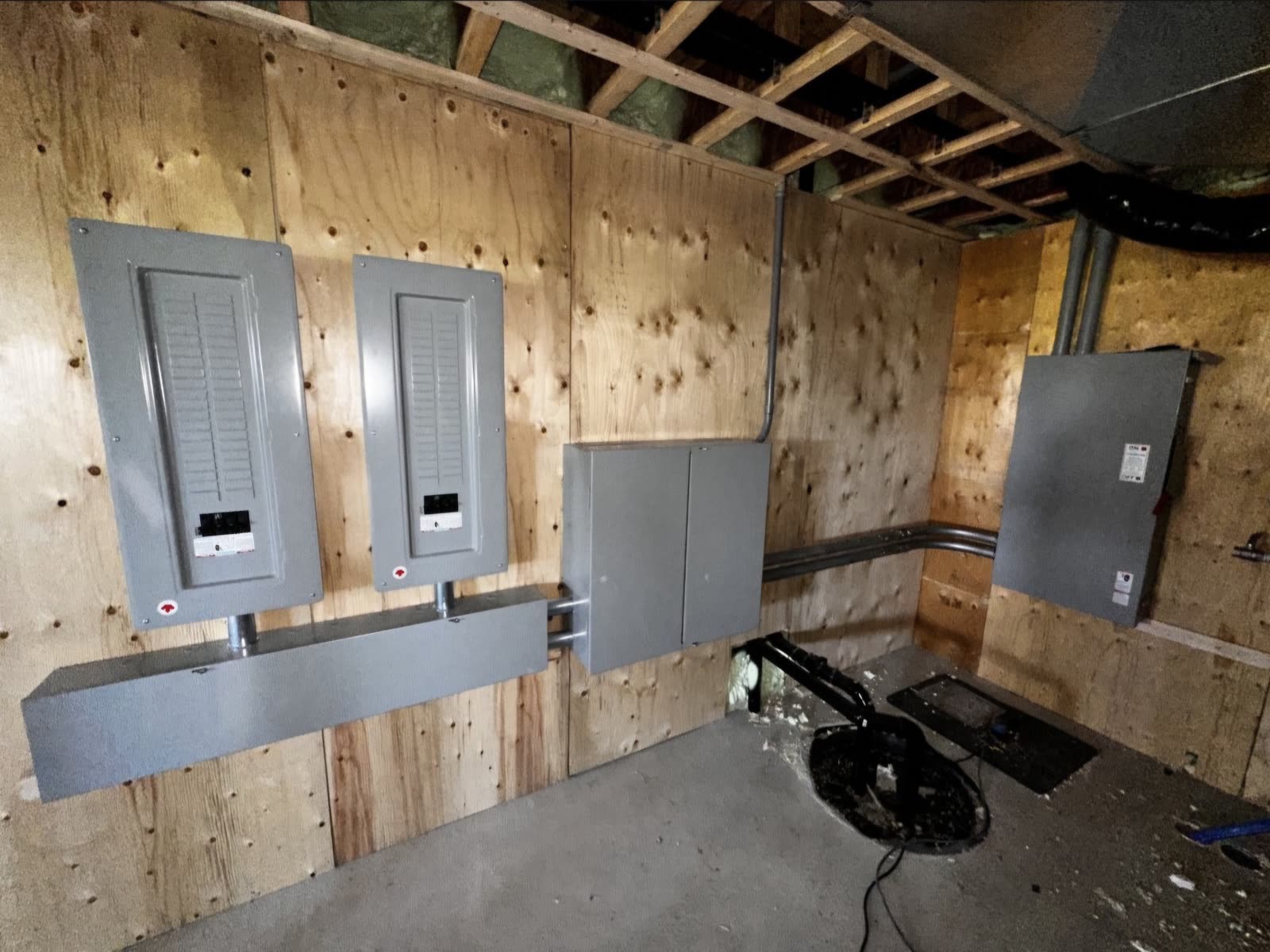
The charger's amperage, 30 A to 50 A for the models we install, sets the wire gauge and the breaker required. A 100 A panel can often take a 30 A charger. But if you already have a heavy load at home (central A/C, electric baseboards, a hot tub), a load calculation under the Quebec Electrical Code is needed before adding the charger. If capacity is short, a 200 A panel solves it in full compliance. A more powerful charger only helps if your vehicle can accept that power: its manual says so.
03 · Key step
Models: why this page has no ranking
You will find online rankings of the best home charger. This page offers none: no comparative test backs one, and a ranking without a test would not help you choose. What we can say is that we install Level 2 chargers from Tesla (Tesla Wall Connector), ChargePoint (Home Flex), Flo (Home X5), EVduty, Wallbox (Pulsar Plus) and Grizzl-E, among others, and that the right model is the one that is connected, appears on the official list if you want the grant, suits your vehicle and can be fed by your panel. Own a Tesla? See our Tesla Wall Connector guide.
04 · Key step
Five checks before you buy
Before you buy, confirm five points. One: the charger is Level 2 and connected. Two: it is on the official list of eligible models. Three: it is new and sold by a Canadian retailer, with an invoice in your name showing the price actually paid. Four: your panel has the required capacity, which a visit can confirm. Five: the location and the distance to the panel are settled, since they affect the work. Ask for a free quote: we assess your panel, the chosen spot and the wire route, then give you a clear price. For cost benchmarks, see our EV charger price guide.
Our process
How we work
Quote request
Describe your project, we respond quickly.
Assessment
Free visit and analysis of your needs.
Installation
Clean, safe work, code compliant.
Warranty
Satisfaction guaranteed, post-install follow-up.
Frequently asked questions
Your questions, our answers
Not everyone does: a Level 1 charger plugs into a 120 V outlet, but it charges more slowly. Level 2 (208 or 240 V) is the level we install at home, and the only one the Écorecharge program accepts for its $600 grant.
We do not publish a ranking: no comparative test would back it. The right charger is connected, appears on the official list if you want the grant, suits your vehicle and can be fed by your panel.
To get the $600 Écorecharge grant, yes: since April 1, 2026, only connected chargers qualify. It must also appear on the official list and be new, bought from a Canadian retailer.
Often yes for a 30 A charger. But if you already have a heavy load (central A/C, electric baseboards, a hot tub), a load calculation under the Quebec Electrical Code is needed. If capacity is short, a 200 A panel solves it.
The Tesla Wall Connector is a Level 2 (240 V) charger, like the ones we install for other brands. For the purchase to qualify for the grant, check that the model is on the official list and that it is connected.
Yes. Whether you have already bought your charger or not, the first visit is the same: we look at your panel, the chosen spot and the wire route.
Ready to start?
Request your free quote
No obligation. Quick response. Best price guaranteed.